
Tracing Former Owners of a Cabell County Property
A prior-owner search in Cabell County starts with the latest deed. It then moves backward through the grantor-grantee chain. The County Clerk IDX reaches back to 1900. Older material lives elsewhere. The West Virginia Archives finding aid lists Cabell deed books. It also lists an index reaching to 1808. Expect complications. A former owner may appear under an estate, a trustee, a business, or a variant spelling. Some historic index segments are missing. Match each deed's legal description to the parcel. That keeps the chain on the same land.
| Source | Years It Covers | Where Held | What It Shows |
|---|---|---|---|
| County Clerk IDX date search | 1900 through current interface date | Cabell County Clerk | Searchable instrument index; image availability varies. |
| Cabell deed books | 1809-1901 | WV Archives finding aid and courthouse holdings | Original or microfilm deed sequence. |
| Deed index | 1808-1968 | WV Archives and History | Grantor/grantee finding aid, with noted missing segments. |
| Land books | 1809-1900 | WV Archives and related holdings | Historical property-tax listing context. |
For a recent transfer, begin in the Clerk IDX. Pull the deed image from there. Transfers older than that date range belong to the Archives index and deed books. Land books and estate records can add context around a sale. Lot history often lives in a recorded map book or surveyor record. Remember, the 1900 interface start is not where Cabell's land records begin.
Walking a Cabell County Deed Chain in Reverse
Every transfer hands you the next name to search. A deed naming a current grantee and prior grantor points you to that grantor. That grantor made an earlier purchase of the same parcel. Search that name as a grantee in the earlier period. Keep repeating until the chain reaches the depth a house history or title review needs. Write down dates and book references as you go. A deed date, a recording date, and a tax-map folder date are three different things.
- Find the newest deed for the parcel and record the grantee, grantor, date, instrument number, and legal description.
- Search the former grantor as a grantee in an earlier date interval and compare the land description.
- Continue backward, checking releases, trust deeds, estate files, corrective deeds, and maps when the transfer raises a question.
- When the online date selector no longer reaches the target year, use the Archives deed index and original book references.
- Grantor / grantee
- The conveying and receiving parties named in a transfer instrument.
- Chain of title
- The linked sequence of recorded instruments for the same land.
- Legal description
- The written land description used to match a historic deed when street names have changed.
How Far Back Cabell County Ownership Records Reach
Archives lists Cabell deed books from 1809 through 1901. It also lists land books from 1809 through 1900. Its deed index spans 1808 through 1968. Historic Cabell research can reach well past the County Clerk interface's 1900 date control. Each series carries its own coverage and access route, though. No official account of a courthouse fire or flood loss exists. So do not blame a gap on a disaster without separate evidence.
Lawful use. Former-owner research is for house history, title work, and property diligence. Do not use old or current owner information to track or harass a living person.
Cabell County Former Owners Can Fall in a Missing Index Segment
The Archives finding aid flags several missing pieces in the 1808-1922 deed index. Grantor coverage is incomplete for names starting with Sm-Sz, T-U-V, and W-X-Y-Z. Grantee coverage drops names beginning with D. A former owner search may stall in one of those letter groups. It needs a workaround, not a dead end. Try alternate spellings first. Then check an adjacent letter group. You can also try the other party to the deed or the original deed book itself. An empty index segment never proves a missing deed. Write down the exact group, letter range, and book you searched. A later deed may name the earlier grantor. It may sharpen the legal description too. Build from that evidence instead of trusting one blank result. The Archives Cabell finding aid shows both the coverage and the gaps.
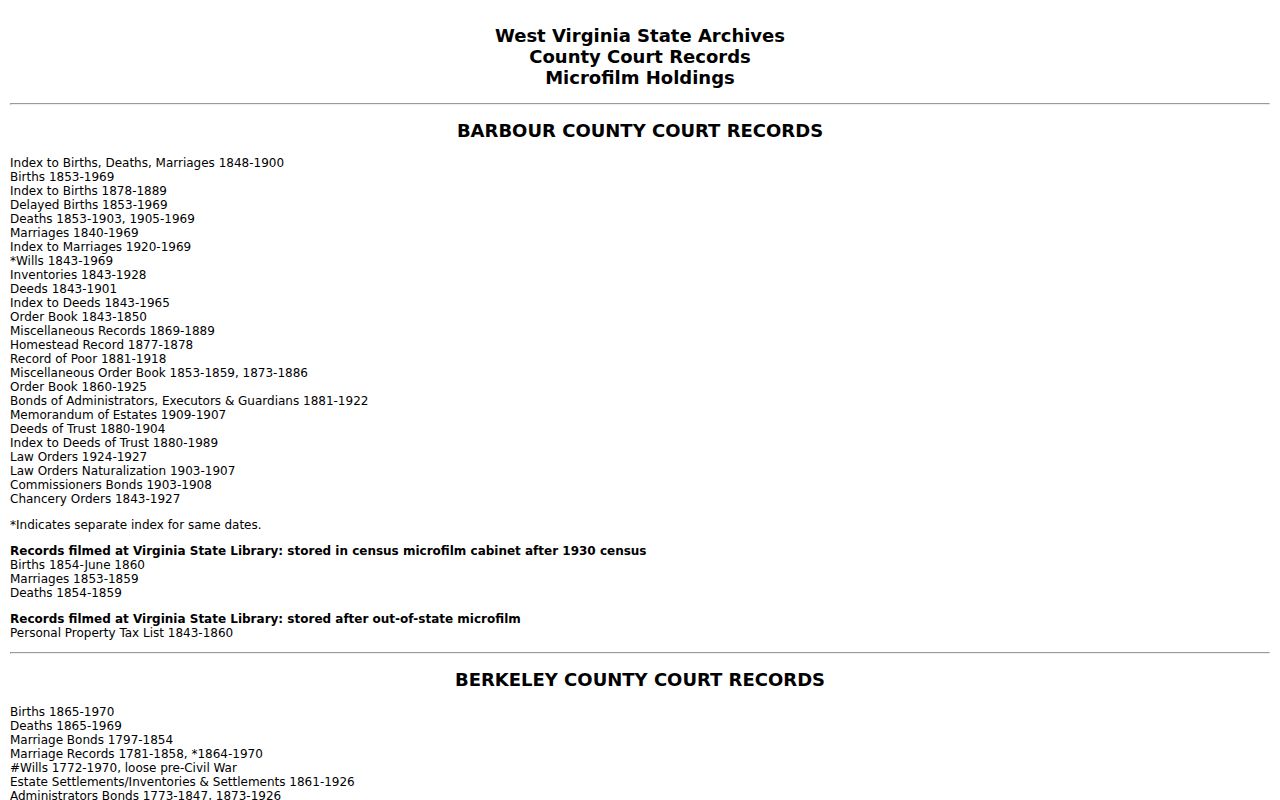
Check the finding aid first to pin down a series and call number for the Cabell County property records you need, then pull the deed or parcel file itself.
Cabell County Prior Owners May Appear in Estate and Trust Records
A tidy chain of title can shift names without any sale taking place. People die. Trustees take over. Businesses hold title in their own name. The Clerk IDX handles these turns through its Estates and probate groups, which hold wills, fiduciary orders, executor and administrator bonds, death deeds, certificates of transfer, and heir affidavits. Trust deeds and trustee changes sit among the recorded types and books as well. Search the individual and the fiduciary or entity name together, then tie the estate instrument to the deed that follows it.
Context helps, but it is not proof. A will, obituary, or vital record may explain a family connection, yet none of them alone shows that title moved. Probate orders plus recorded conveyances do that work. For vital-record copies, access depends on the record's age, your eligibility, the form used, and protected-data rules.
Cabell County Former Owners Need Historic Map Context
Old Cabell County deed descriptions rarely read like modern addresses. Instead, a tract may be identified by district, map, lot, or the owner next door. The Assessor directory carries that vocabulary across its maps. Those maps cover Guyandotte, Huntington Guyandotte, Barboursville, Town of Barboursville, Town of Milton, Union, Grant, Gideon, Kyle, and McComas. County Clerk Map Book entries, Deed with Map records, and the Surveyors Record Book help bridge an old lot to a current parcel.
Treat maps as a locating tool. They identify land; they do not prove a former owner. Compare the old plat against the deed's boundary calls and today's tax-map key. The county GIS can orient the parcel in its modern setting. A historic map image may show a layout that no longer matches current numbering, though.
Cabell County House History Adds Library and Archives Context
Cabell County Public Library’s research portal opens the door to its local-history and genealogy services. The James E. Casto Local History Room collects material on Cabell County. It also covers nearby communities in Ohio and Kentucky. Its holdings include books, serials, microfilm, audiovisual items, and online databases. Ask the staff about newspapers and obituaries. They can also point you to historic photographs, reverse directories, census materials, cemeteries, and street-name references. These are context sources for a house history. For actual title transfers, deed books and probate files remain the primary records.
West Virginia Archives adds court, land, census, naturalization, military, and newspaper material. A city directory can show who lived at an address in a given edition. Coverage, though, is not continuous. No complete licensed Cabell County directory run exists. Pair a known year with a census record or a deed. Do not trust the directory alone.
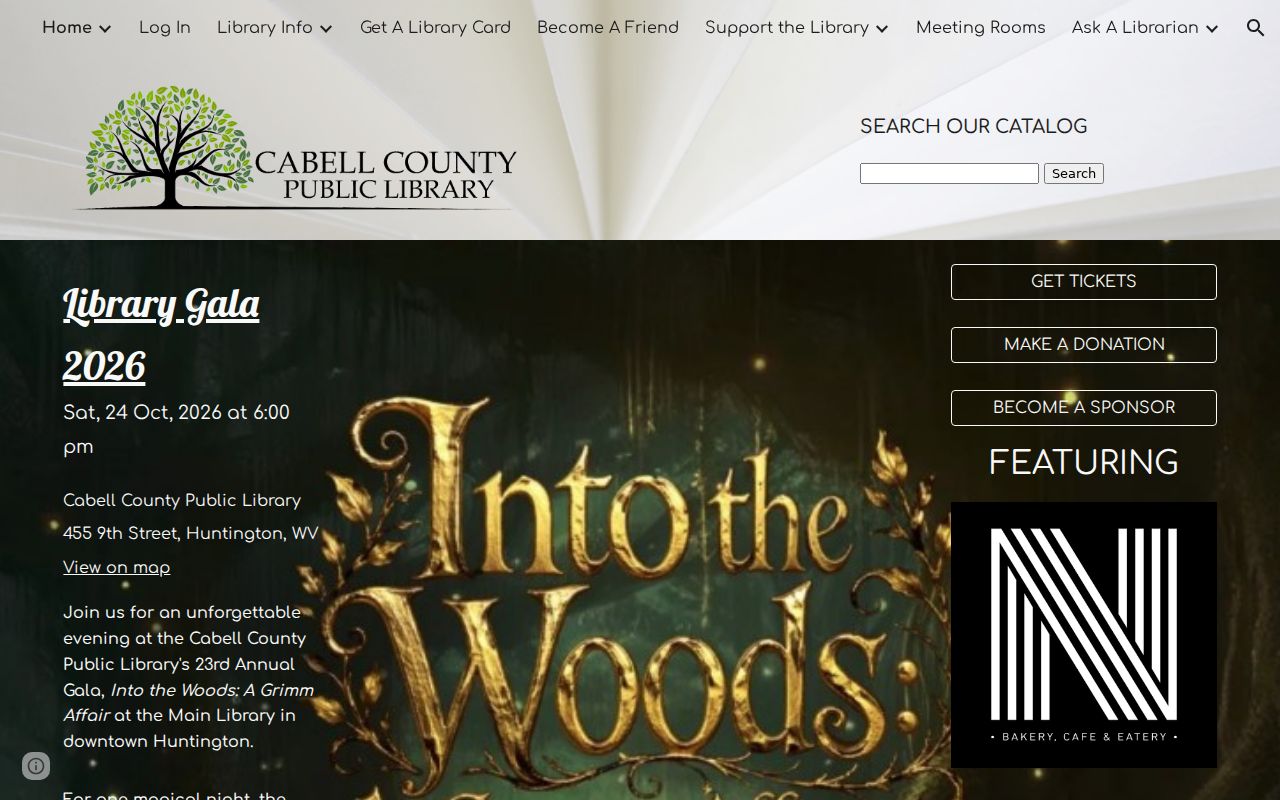
The portal points to historical context and research tools. It does not replace a recorded deed or a certified title record.
Cabell County Former Owners May Be Indexed by an Older Place Name
Cabell County's 1930 census materials identify Huntington districts, Barboursville portions, Milton, and rural districts. The county's tax-map folders also preserve district names. These may not match a present postal city. Place names and street labels can change over the decades. When they do, search with the old place vocabulary and the deed's legal description together. No official countywide street-renumbering history exists. Confirm any suspected address change through an original directory, a census map, or a recorded plat.
A modern tax map can help you locate the land. It cannot name former owners by itself. Keep the chain of ownership tied to the same parcel. The address vocabulary may shift across time.